Monday, April 30, 2007

Ode on a Grecian Urn


Thou still unravished bride of quietness,
Thou foster child of silence and slow time,
Sylvan historian, who canst thus express
A flowery tale more sweetly than our rhyme:
What leaf-fringed legend haunts about thy shape
Of deities or mortals, or of both,
In Tempe or the dales of Arcady?
What men or gods are these? What maidens loath?
What mad pursuit? What struggle to escape?
What pipes and timbrels? What wild ecstasy?

Heard melodies are sweet, but those unheard
Are sweeter; therefore, ye soft pipes, play on;
Not to the sensual ear, but, more endeared,
Pipe to the spirit dities of no tone.
Fair youth, beneath the trees, thou canst not leave
Thy song, nor ever can those trees be bare;
Bold Lover, never, never canst thou kiss,
Though winning near the goal---yet, do not grieve;
She cannot fade, though thou hast not thy bliss
Forever wilt thou love, and she be fair!

Ah, happy, happy boughs! that cannot shed
Your leaves, nor ever bid the Spring adieu;
And, happy melodist, unweari-ed,
Forever piping songs forever new;
More happy love! more happy, happy love!
Forever warm and still to be enjoyed,
Forever panting, and forever young;
All breathing human passion far above,
That leaves a heart high-sorrowful and cloyed,
A burning forehead, and a parching tongue.

Who are these coming to the sacrifice?
To what green altar, O mysterious priest,
Lead'st thou that heifer lowing at the skies,
And all her silken flanks with garlands dressed?
What little town by river or sea shore,
Or mountain-built with peaceful citadel,
Is emptied of this folk, this pious morn?
And, little town, thy streets for evermore
Will silent be; and not a soul to tell
Why thou art desolate, can e'er return.

O Attic shape! Fair attitude! with brede
Of marble men and maidens overwrought,
With forest branches and the trodden weed;
Thou, silent form, dost tease us out of thought
As doth eternity. Cold Pastoral!
When old age shall this generation waste,
Thou shalt remain, in midst of other woe
Than ours, a friend to man, to whom thou say'st,
"Beauty is truth, truth beauty"---that is all
Ye know on earth, and all ye need to know.

-John Keats, 1820

Sunday, April 29, 2007

What can blue, green and brown do for you?

image credit united parcel service of america, incorporated

Saturday, April 28, 2007

Beautiful People by Melanie Safka


Beautiful people
You live in the same world as I do
But somehow I never noticed you before today
I'm ashamed to say

Beautiful people
We share the same back door and it isn't right
We never met before but then
We may never meet again

If I weren't afraid you'd laugh at me
I would run and take all your hands and

I'd gather everyone together for a day
And when we gather'd
I'll pass buttons out that say: Beautiful People

Then you'd never be alone
'Cause there'll always be someone
With the same button on as you
Include him in everything you do.

Beautiful people
You ride the same subway as I do ev'ry morning
That's got to tell you something

We got so much in common
I go the same direction that you do
So if you take care of me
Maybe I'll take care of you

Beautiful people
You look like friends of mine
And it's about time
That someone said it here and now
I make a vow that some time, somehow
I'll have a meeting
Invite ev'ryone you know
I'll pass out buttons for
The ones who come to show

Beautiful people
You never have to be alone
'Cause there'll always be someone
With the same button on as you
Include him in ev'rything you do

He may be sitting right next to you
He may be beautiful people too

And if you take care of him
Well maybe he'll take care of you


'Cause all of the beautiful people do
And I'm a beautiful people too....

Beautiful People, words and music copyright Melanie Safka

Wednesday, April 25, 2007

Brave enough to accompany the beautiful


J. Ruth Gendler's astute and loving observations of our human condition are packed tight into The Book of Qualities. She brings forth a world where Beauty, Blame, Sensuality, Complacency, Guilt, Power and many, many others are neighbors, relatives, friends and enemies. Each of the 74 qualities she describes has its own personality traits--some of which you may expect, many you may not, yet few you will dispute. She is a wise woman with a weird and essential vision of who and how we are.

Beauty is startling. She wears a gold shawl in the summer and sells seven kinds of honey at the flea market. She is young and old at once, my daughter and my grandmother. In school she excelled in mathematics and poetry. Beauty doesn't anger easily, but she was annoyed with the journalist who kept asking her about her favorites--as if she could have one favorite color or one favorite flower. She does not usually mind questions though, and she is especially fond of riddles. Beauty will dance with anyone who is brave enough to ask her.*

The play of "young and old at once," "mathematics and poetry" and irriation over chosing favorities sent a flash of recognition through me. Still, I wasn't convinced of Gendler's vision here until "Beauty will dance with anyone who is brave enough to ask her." This is true, and I know it from both sides: the stunned and the stunning.

So often, we feel we won't measure up to our visions of greatness, of beauty, of integrity. When we shy away from them, safe, small, lame and ashamed we leave the greatness unattended and lonely.

Consider this in the most literal sense: there are babes aplenty too hot to talk to and few among us who can get beyond that and engage them. Everyone needs love and attention. Even the very, very, very attractive. People're always asking how Regular Joes end up with the knockouts they do. It may be money, it may be power, but those attributes are hollow without confidence and courage at their source.

Consider too, that sometimes it isn't just that we are now too little and lame, but that we don't even believe we should build ourselves into the greatness we can imagine.

Our deepest fear is not that we are inadequate. Our deepest fear is that we are powerful beyond measure. It is our light, not our darkness that most frightens us. We ask ourselves, Who am I to be brilliant, gorgeous, talented, fabulous? Actually, who are you not to be? You are a child of God. Your playing small does not serve the world. There is nothing enlightened about shrinking so that other people won't feel insecure around you. We are all meant to shine, as children do. We were born to make manifest the glory of God that is within us. It's not just in some of us; it's in everyone. And as we let our own light shine, we unconsciously give other people permission to do the same. As we are liberated from our own fear, our presence automatically liberates others. **

Liberate yourself. Liberate the others. Talk to all the 10s you can. Get right up close to the Sun, Apollo. Your blaze of glory is waiting.


*J. Ruth GendlerThe Book of Qualities. Turquoise Mountain Publications, 1984 (pg. 27). Thanks Mark!
**Marianne Williamson. A Return to Love: Reflections on the Principles of a Course in Miracles. Harper Collins, 1992. From Chapter 7, Section 3 (Pg. 190-191).

Eleven years ago...


...I bought this issue of Interview and knew I wasn't alone.
Inside, is a page of arty celebrities describing in a sentence or two what beauty is for them. There is such passion and intimacy in those lines. It was so good to know that people were thinking this way--cataloging what stirs their souls.

Elate: magazine cover

I love when ugly girls get pretty! It is my favorite cinematic cliche of all time. When the librairian's bun comes down! When the makeunder is revealed! When Oprah gets hotter every month! Terriffic.

Remember the Simpons episode when Moe gets to be a soap opera star like he always wanted but then Lindsay Negel says they want TV ugly, not ugly ugly? America Ferrera was clearly never ugly ugly, but this cover is so lush it doesn't matter what her show's about at all. Fantastic. Really.

I love these colors too. Any shade of blue-green with some smoky grey-brown cast is pretty much a perfect photograph for me. Plus gold? Totally.

Tuesday, April 24, 2007

Enrage: magazine cover

Oh man, I'm not sure why, but this cover is really getting to people. I keep overhearing conversations where the phrase "so obviously photoshopped" is hissed as the issue gets flung back on the rack. Why the rage? It's so photoshopped it's not tricking anyone right? Photoshop's complex digital processes don't leave behind toxins our children and our children's children will inherit, do they?

Maybe celebrities really shouldn't promote anything but their own movies. People always sound like such haters when they say this, but maybe it's true. Like, for instance, what's he scowling about? Is he scowling at me because I am polluting the earth? So is he! Movies are made of plastic, Leo. What movie's he coming out with anyway? He's not just on there for that damn Prius is he? Sigh. And to think how deeply I loved him on Growing Pains.

UPDATE DiCaprio's made a documentary about personal environmental responsibility called The 11th Hour, and is showing it at the Cannes Film Festival in France. 20MAY07

Thursday, April 19, 2007

What is this thing called now?


Something's up: everything's hot off some presse, lovingly designed with art-deco-throw-back flair. The band names are from dreams of owl machines and everyone's drawing again. Perhaps the common thread is digital zeitgeist backlash: the power for hyperrealism has ceased to thrill the artistic and productive among us, and they've looked to the other end of the spectrum for inspiration.

Though Chris Ware's untouchable in this regard, I'm seeing a lot from the McSweeny's franchise as well. The covers of Wholphin, The Believer and their periodical anthologies are straight graphic nostalgia. They publish so much that I assume any new book I see with that look is theirs. (The cover of Dead Beat was designed by Milan Bozic, a contemporary designer who has nothing at all to do with McSweeny's. Astonishing.) What is this graphic trait called? McSweeny's-y is losing its appeal.

Labeled or labeless, I like what the trend implies:

With computers these days, we can do whatever we want whenever we want and for cheap. Remember when design was slow and expensive and our accomplishments felt momentous and important? Let's make it look like that again. That felt really good. Also there was more stuff everywhere, and stuff's not so bad. Clean design's had its fun—bring on the clutter!

Graphically, we can make anything look like anything we want, so, instead, we daydream about the aesthetic of yesteryear and create it with today's cool tools.

On Repeat: The Lamentable Power of the Gluttonous Loner


My name is Varsity Aesthete, and I repeat music. Repeatedly.

Years ago, when it finally became possible for me, I often enjoyed my music this way. Soundly out of the cassette ghetto, I was awash in the luxury of "repeat all" and "repeat one" - loving the songs more and more each time they played - and as ungrateful and dismissive of this power as the most blissfully spoiled child.

It wasn't until college that I began to push "repeat" with any twinge of anything, and even then it really wasn't much at all. After years of free time alone, I was suddenly 24-hour slumber-partying with all the other freshmen. We'd pile into eachothers' rooms soaking up the social, and it was terrific.

One night, I got to my room and found a bunch of my friends inside chatting - in silence. When I asked what'd happened to the music I'd left on, a pitying glance or two flickered amongst their faces. Finally, very calmly and with a bit of some pointed emotion, I was told that they'd turned it off because I "left it on repeat".

That "left it on repeat" was so loaded for me. The public/private protection was gone and I was out there exposed: naked and gluttonous.

It's only in the past few days as I've been trying to defend this quirk that I've gotten so far in understanding what may be wrong with it. Maybe what's wrong is that it's gross. Gross like eating the large all by yourself in your room alone is gross. You don't want company, it's all for you and no one else needs to know about it. Gross. It's also so bratty. So only child. Christ. What could be more the-world-is-my-oyster-and-always-has-been, oh-when-did-you-get-here? Yikes.

The troubling momentum of self-recrimination has sent me off the deep end here. This post has taken on a guilt-ridden, confessional life of its own. I am beat, I am sad, and I haven't even covered the aesthetic concerns at all.

In Six Names of Beauty, Crispin Sartwell investigates, among many other qualities, the aspect of beauty that comes from rareness, scarcity and innocence.

"My son Sam, now eleven, once crawled across a field at my mother's house toward a huge full moon on the horizon, trying to put it in his mouth. I myself saw the moon differently that night, and am now capable in a pinch of seeing it that way again. But it is a sad and necessary truth about people that the things we experience often become commonplace, that the green on the tree behind the house can no longer be for us a cause of rejoicing unless we receive with it a refreshment of experience in general. We cannot always achieve such a refreshment, and the dullness of the world emerges from our own dullness, from the bluntness of our desires and the and the surfeit of sensation in the course of a life."

Without meaning to, I am perhaps stripping my favorites of their appeal by indulging my desire to enjoy them over and over and over again. There is so much more to say about this, but I am exhausted and more than a little bummed out by this revelation.

Some other time, okay?

Sunday, April 15, 2007

The French, Part One

Is it just me, or do the French have the grandeur and glory aesthetic on lock? Honestly, this rendering of their new concert hall, Philharmonie de Paris is alarming in its beauty. What must it be like to live in Paris (eww...I can't believe I just said that. I thought only a certain kind of person breathlessly dreamed of a Parisian life...and frankly I did not think I was one. Ah well. C'est la vie!) surrouned by large stone palaces, grand avenues and women whose blood is couture?

Thursday, April 12, 2007

Joan Collins

"The problem with beauty is that it's like being born rich and getting poorer."

Sunday, February 25, 2007

Courage to be nice

Summoned some easy like sunday morning earlier and said hi to the guys selling "Newports. Newports. Packs and loosies."

My good morning beamed back to me tenfold from the warmed heart of the homeboy with a glistening apple cheeked smile and an appreciative nod to my W4th look.

So glad I had to courage to be nice.

Friday, February 16, 2007

Beauty Shmooty. Grandeur Blandeur


Beauty schmooty!! scoffs Hal Duncan. It's not about the universal grandeur of this or the ennobling glory of that. Your aesthetics are your business. They are the set of your own visceral responses to the stimuli of the world around you.

Those that elate you are just as much a part of your aesthetic as those that enrage you. Elate or enrage, "fight or fuck", you are a taste-making factory all your own.

So what? you say? Well, I'm not sure what other than I like having the conversation open to what we hate and not just what glorifies this priceless existence.

There is, as usual, so much more to this post (including the purpose of sentience and science experiements with angry monkeys), but I will not be tackling it now.

Accountability


I was recently asked how my blog was going.

Just as my cyber spirits lifted, "The Written Nerd's been reading me!", the hard facts burst through the shimmer, so gross and so familiar.

I punked out and joked that I was writing it in my head. This lame response was rightly and clearly noted as such. Off she and the conversation went like so many rolled eyes and fallen crests before.

Accountability is a beautiful thing really. Strong and simple, "Did you do what you said you would?" is always there to face squarely or slink away from. Always.

I must must must remember that the plain truth of what I've actually gotten done is the most accurate indication of who I am, far surpassing any to-do list, no matter how brilliant in scope or range or penmanship.

Integrity, honesty, and truth. The simple, the plain, and the uncluttered all beckon with the beauty of their strength.

"You will like it here. We are noble and unworried. No one at all can fuck with us."

Wednesday, October 18, 2006

Natural Affinity?

I have this visceral response when some greens and blues come together. I wonder sometimes if the appeal is universal. Are we wired as humans to enjoy the colors in nature?

I heart yes-no

Passed this gem on my bike. Hopped off with an ear-to-ear grin. Wanted to take a big bite! The red, the blue, the old, the new. My, my, my. Looks like candy, right? Mmmm....

Tuesday, October 17, 2006

Aesthete Guilt at the Movies


Two-thirds of the way through Open Water, I noticed the gorgeous Caribbean seascapes where the couple is dealing with their life and death decisions and desperation. As the skies became saturated in pinks and reds and the striking silhouettes of the clouds sharpened, beauty was again put in its place. Not once mentioned - aesthetically powerful yet irrelevant in light of the present human drama.

Monday, October 16, 2006

Spider release

Technorati Profile

Glossary


aesthete: one having or affecting sensitivity to the beautiful especially in art

aesthetic: a particular theory or conception of beauty or art --
a particular taste for or approach to what is pleasing to the senses and especially sight

aesthetics: a branch of philosophy dealing with the nature of beauty, art, and taste and with the creation and appreciation of beauty--a pleasing appearance or effect

beauty: the quality or aggregate of qualities in a person or thing that gives pleasure to the senses or pleasurably exalts the mind or spirit--a particularly graceful, ornamental, or excellent quality


photo by Cody Pomeroy via flickr
definitions from www.m-w.com

Sunday, October 15, 2006

Yapha

It was one of those sparkly days. I'd just been fired and was so delighted to be free and undetermined. This shot was irresistable: the glowing debris so pefectly decorative in the gray-brown field--the yes-no so textbook. Who can gamble on laser eye surgery when vision is so delicious?


photo by Varsity Aesthete MAR06

Saturday, October 14, 2006

Betty Borges

organic electric secret rockstar
casually mythical
riding that vein of beauty that fuels enviable existence
capiliaries tributaries dignitaries
disseminating magic
to those who don't know it's free
pirate buddies
stealing grandeur and glory
from where it is going to waste
twenty-six laps around the sun
don't stop now
my plundering sac's only half full
April 2005
photo by tearapen via flickr

Friday, October 13, 2006

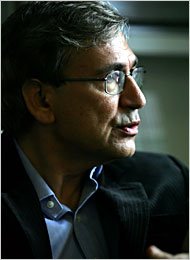
Orhan Pamuk on Beauty and Decay


Pamuk was awarded the Nobel Prize in Literature on Thursday, and today The New York Times published this excerpt from his memoir Istanbul: Memories and the City translated from the Turkish by Maureen Freely. Quickly reading through the paper on my way to work this morning the passage shook me pointing to a segregation I hadn't seen before and an arrogance I hadn't fully acknowledged.

To savor Istanbul’s back streets, to appreciate the vines and trees that endow its ruins with accidental grace, you must, first and foremost, be a stranger to them. A crumbling wall, a wooden tekke — condemned, abandoned, and now fallen into neglect — a fountain from whose faucets no water pours, a workshop in which nothing has been produced for eighty years, a collapsing building, a row of homes abandoned by Greeks, Armenians, and Jews as a nationalist state bore down on minorities, a house leaning to one side in a way that defies perspective, two houses leaning against each other in the way that cartoonists so love to depict, a cascade of domes and rooftops, a row of houses with crooked window casings — these things don’t look beautiful to the people who live among them; they speak instead of squalor, helpless hopeless neglect. Those who take pleasure in the accidental beauty of poverty and historical decay, those of us who see the picturesque in ruins — invariably, we’re people who come from the outside.

Often I feel pleased and proud blissing out on broken this, or fraying that as I go about my life. Thank goodness for me, you know, rootin' for the underdog. However, even I am occasionally put off by my unexamined pleasure at some of life's difficulties. Usually though, it's all private and in my head and I mostly ignore the complication and chalk up another point for myself on the aesthete scoreboard. There was one time though, that my indiscriminate bliss hurt my Mom's feelings and exposed a callousness that made me embarrassed.

Back in high school, when I was still going to church with Mom every week and considered polish and sheen a kind of disingenuous showing off, preferring instead the authenticity of wear and tear, I considered making a series of photographs showing the decaying beauty of the city. Mentioning this to Mom one Sunday, I recall she supported the idea at first, but that as I pointed in illustration to the paint falling cracked and rotten off the walls high above the congregation, she winced admonishing me, "Oh no. Don't photograph that." She felt the building's dignity eroding with its physical changes and saw my photographing that as an exploitative exposure of these sad circumstances. As photographers we shared a vision, but our sympathies and allegiances were very different.

While the deterioration endeared the old building to me, in the years since, I've found that the polished and grand and perfect are indeed beautiful to me now as well. At that time though, perhaps due to my youth and perceived smallness, the imperfections of grand things cut them down to size. It's hard to say for sure, of course, because that sort of reflective introspection is so imprecise, but recalling that exchange even now, a part of me winces at the arrogance of not even considering another perspective.

For Mom it was a sign of the poor condition of our parish at the time, but I, removed from concern by youth, asked only for the church to please me. Mom felt instead the more adult pangs of responsibility and obligation.

What makes the passage from Istanbul especially valuable though is Pamuk's concession in the end. With "us" and "we're", this author, so often preoccupied by the complications of identity and allegiance, lowers his pointed finger and joins us in the detached romance of good fortune.


Photo Credit Nicole Bengiveno NYT

Wednesday, September 20, 2006

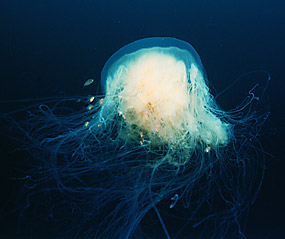
Phosphorescent Bees of the Future


Daily I enjoy your particular blend of jolly smart-ass and the physicality of your aesthetic. One day, we may look back on how we got so amazing, and smile at all the beautiful things we made.

photo credit Ocean Oasis © 2000 CinemaCorp of the Californias

Wednesday, August 16, 2006

Tuesday, August 15, 2006

Wild Animals Don't Get Fat


And that's beautiful. It's in the elegance of necessity--form following function. Lack of excess is so gorgeous. Where is beauty for you? I feel it in the unchecked openness of small children; in the dizzy bliss of sleep deprivation or the first few drinks where the self I often edit and supress flows so easily; drinking water and not soda; raw and steamed vegetables not roasts and sautees. Keep me close to the world as it cannot help but be, and my soul will shout YESYESYES reawakened to the ecstasy of this existence.

When I am envying eagles and bears, confused and depressed by the excesses of civilization, beauty feels so far away. Still civilization (like cyanide) is also natural and therefore necessary and faultless. What am I seeking? More good feelings and a deeper connection. I feel the universe so much more when I am closer to its simpler state.
Let me bike and use my body--wilderness commute! Drop me unsuspecting into the deafening quiet of a forest--my mind changes. I smile and sing. Show me the rainbow galaxies above me--my big life also so so small. Remind me where and what I come from, and I will remember I am so glad to be alive.

Monday, August 14, 2006

Ancient Roadmap


My heart races when I read this. An ancient call to action. Spend some time with this.


Exploring Ancient World Cultures Readings from Ancient Rome
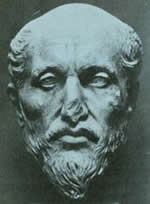
Ennead I.6 [1], On Beauty
Plotinus / Translated by Stephen MacKenna

1. Beauty addresses itself chiefly to sight; but there is a beauty for the hearing too, as in certain combinations of words and in all kinds of music, for melodies and cadences are beautiful; and minds that lift themselves above the realm of sense to a higher order are aware of beauty in the conduct of life, in actions, in character, in the pursuits of the intellect; and there is the beauty of the virtues. What loftier beauty there may be, yet, our argument will bring to light.
What, then, is it that gives comeliness to material forms and draws the ear to the sweetness perceived in sounds, and what is the secret of the beauty there is in all that derives from Soul?
Is there some One Principle from which all take their grace, or is there a beauty peculiar to the embodied and another for the bodiless? Finally, one or many, what would such a Principle be?
Consider that some things, material shapes for instance, are gracious not by anything inherent but by something communicated, while others are lovely of themselves, as, for example, Virtue.
The same bodies appear sometimes beautiful, sometimes not; so that there is a good deal between being body and being beautiful.
What, then, is this something that shows itself in certain material forms? This is the natural beginning of our enquiry.
What is it that attracts the eyes of those to whom a beautiful object is presented, and calls them, lures them, towards it, and fills them with joy at the sight? If we possess ourselves of this, we have at once a standpoint for the wider survey.
Almost everyone declares that the symmetry of parts towards each other and towards a whole, with, besides, a certain charm of colour, constitutes the beauty recognized by the eye, that in visible things, as indeed in all else, universally, the beautiful thing is essentially symmetrical, patterned.
But think what this means.
Only a compound can be beautiful, never anything devoid of parts; and only a whole; the several parts will have beauty, not in themselves, but only as working together to give a comely total. Yet beauty in an aggregate demands beauty in details; it cannot be constructed out of ugliness; its law must run throughout.
All the loveliness of colour and even the light of the sun, being devoid of parts and so not beautiful by symmetry, must be ruled out of the realm of beauty. And how comes gold to be a beautiful thing? And lightning by night, and the stars, why are these so fair?
In sounds also the simple must be proscribed, though often in a whole noble composition each several tone is delicious in itself.
Again since the one face, constant in symmetry, appears sometimes fair and sometimes not, can we doubt that beauty is something more than symmetry, that symmetry itself owes its beauty to a remoter principle?
Turn to what is attractive in methods of life or in the expression of thought; are we to call in symmetry here? What symmetry is to be found in noble conduct, or excellent laws, in any form of mental pursuit?
What symmetry can there be in points of abstract thought?
The symmetry of being accordant with each other? But there may be accordance or entire identity where there is nothing but ugliness: the proposition that honesty is merely a generous artlessness chimes in the most perfect harmony with the proposition that morality means weakness of will; the accordance is complete.
Then again, all the virtues are a beauty of the soul, a beauty authentic beyond any of these others; but how does symmetry enter here? The soul, it is true, is not a simple unity, but still its virtue cannot have the symmetry of size or of number: what standard of measurement could preside over the compromise or the coalescence of the soul's faculties or purposes?
Finally, how by this theory would there be beauty in the Intellectual-Principle, essentially the solitary?

2. Let us, then, go back to the source, and indicate at once the Principle that bestows beauty on material things.
Undoubtedly this Principle exists; it is something that is perceived at the first glance, something which the soul names as from an ancient knowledge and, recognising, welcomes it, enters into unison with it.
But let the soul fall in with the Ugly and at once it shrinks within itself, denies the thing, turns away from it, not accordant, resenting it.
Our interpretation is that the soul- by the very truth of its nature, by its affiliation to the noblest Existents in the hierarchy of Being- when it sees anything of that kin, or any trace of that kinship, thrills with an immediate delight, takes its own to itself, and thus stirs anew to the sense of its nature and of all its affinity.
But, is there any such likeness between the loveliness of this world and the splendours in the Supreme? Such a likeness in the particulars would make the two orders alike: but what is there in common between beauty here and beauty There?
We hold that all the loveliness of this world comes by communion in Ideal-Form.
All shapelessness whose kind admits of pattern and form, as long as it remains outside of Reason and Idea, is ugly by that very isolation from the Divine-Thought. And this is the Absolute Ugly: an ugly thing is something that has not been entirely mastered by pattern, that is by Reason, the Matter not yielding at all points and in all respects to Ideal-Form.
But where the Ideal-Form has entered, it has grouped and coordinated what from a diversity of parts was to become a unity: it has rallied confusion into co-operation: it has made the sum one harmonious coherence: for the Idea is a unity and what it moulds must come to unity as far as multiplicity may.
And on what has thus been compacted to unity, Beauty enthrones itself, giving itself to the parts as to the sum: when it lights on some natural unity, a thing of like parts, then it gives itself to that whole. Thus, for an illustration, there is the beauty, conferred by craftsmanship, of all a house with all its parts, and the beauty which some natural quality may give to a single stone.
This, then, is how the material thing becomes beautiful- by communicating in the thought that flows from the Divine.

3. And the soul includes a faculty peculiarly addressed to Beauty- one incomparably sure in the appreciation of its own, never in doubt whenever any lovely thing presents itself for judgement.
Or perhaps the soul itself acts immediately, affirming the Beautiful where it finds something accordant with the Ideal-Form within itself, using this Idea as a canon of accuracy in its decision.
But what accordance is there between the material and that which antedates all Matter?
On what principle does the architect, when he finds the house standing before him correspondent with his inner ideal of a house, pronounce it beautiful? Is it not that the house before him, the stones apart, is the inner idea stamped upon the mass of exterior matter, the indivisible exhibited in diversity?
So with the perceptive faculty: discerning in certain objects the Ideal-Form which has bound and controlled shapeless matter, opposed in nature to Idea, seeing further stamped upon the common shapes some shape excellent above the common, it gathers into unity what still remains fragmentary, catches it up and carries it within, no longer a thing of parts, and presents it to the Ideal-Principle as something concordant and congenial, a natural friend: the joy here is like that of a good man who discerns in a youth the early signs of a virtue consonant with the achieved perfection within his own soul.
The beauty of colour is also the outcome of a unification: it derives from shape, from the conquest of the darkness inherent in Matter by the pouring-in of light, the unembodied, which is a Rational-Principle and an Ideal-Form.
Hence it is that Fire itself is splendid beyond all material bodies, holding the rank of Ideal-Principle to the other elements, making ever upwards, the subtlest and sprightliest of all bodies, as very near to the unembodied; itself alone admitting no other, all the others penetrated by it: for they take warmth but this is never cold; it has colour primally; they receive the Form of colour from it: hence the splendour of its light, the splendour that belongs to the Idea. And all that has resisted and is but uncertainly held by its light remains outside of beauty, as not having absorbed the plenitude of the Form of colour.
And harmonies unheard in sound create the harmonies we hear, and wake the soul to the consciousness of beauty, showing it the one essence in another kind: for the measures of our sensible music are not arbitrary but are determined by the Principle whose labour is to dominate Matter and bring pattern into being.
Thus far of the beauties of the realm of sense, images and shadow-pictures, fugitives that have entered into Matter- to adorn, and to ravish, where they are seen.

4. But there are earlier and loftier beauties than these. In the sense-bound life we are no longer granted to know them, but the soul, taking no help from the organs, sees and proclaims them. To the vision of these we must mount, leaving sense to its own low place.
As it is not for those to speak of the graceful forms of the material world who have never seen them or known their grace- men born blind, let us suppose- in the same way those must be silent upon the beauty of noble conduct and of learning and all that order who have never cared for such things, nor may those tell of the splendour of virtue who have never known the face of Justice and of Moral-Wisdom beautiful beyond the beauty of Evening and of dawn.
Such vision is for those only who see with the Soul's sight- and at the vision, they will rejoice, and awe will fall upon them and a trouble deeper than all the rest could ever stir, for now they are moving in the realm of Truth.
This is the spirit that Beauty must ever induce, wonderment and a delicious trouble, longing and love and a trembling that is all delight. For the unseen all this may be felt as for the seen; and this the Souls feel for it, every soul in some degree, but those the more deeply that are the more truly apt to this higher love- just as all take delight in the beauty of the body but all are not stung as sharply, and those only that feel the keener wound are known as Lovers.

5. These Lovers, then, lovers of the beauty outside of sense, must be made to declare themselves.
What do you feel in presence of the grace you discern in actions, in manners, in sound morality, in all the works and fruits of virtue, in the beauty of souls? When you see that you yourselves are beautiful within, what do you feel? What is this Dionysiac exultation that thrills through your being, this straining upwards of all your Soul, this longing to break away from the body and live sunken within the veritable self?
These are no other than the emotions of Souls under the spell of love.
But what is it that awakens all this passion? No shape, no colour, no grandeur of mass: all is for a Soul, something whose beauty rests upon no colour, for the moral wisdom the Soul enshrines and all the other hueless splendour of the virtues. It is that you find in yourself, or admire in another, loftiness of spirit; righteousness of life; disciplined purity; courage of the majestic face; gravity; modesty that goes fearless and tranquil and passionless; and, shining down upon all, the light of god-like Intellection.
All these noble qualities are to be reverenced and loved, no doubt, but what entitles them to be called beautiful?
They exist: they manifest themselves to us: anyone that sees them must admit that they have reality of Being; and is not Real-Being, really beautiful?
But we have not yet shown by what property in them they have wrought the Soul to loveliness: what is this grace, this splendour as of Light, resting upon all the virtues?
Let us take the contrary, the ugliness of the Soul, and set that against its beauty: to understand, at once, what this ugliness is and how it comes to appear in the Soul will certainly open our way before us.
Let us then suppose an ugly Soul, dissolute, unrighteous: teeming with all the lusts; torn by internal discord; beset by the fears of its cowardice and the envies of its pettiness; thinking, in the little thought it has, only of the perish able and the base; perverse in all its the friend of unclean pleasures; living the life of abandonment to bodily sensation and delighting in its deformity.
What must we think but that all this shame is something that has gathered about the Soul, some foreign bane outraging it, soiling it, so that, encumbered with all manner of turpitude, it has no longer a clean activity or a clean sensation, but commands only a life smouldering dully under the crust of evil; that, sunk in manifold death, it no longer sees what a Soul should see, may no longer rest in its own being, dragged ever as it is towards the outer, the lower, the dark?
An unclean thing, I dare to say; flickering hither and thither at the call of objects of sense, deeply infected with the taint of body, occupied always in Matter, and absorbing Matter into itself; in its commerce with the Ignoble it has trafficked away for an alien nature its own essential Idea.
If a man has been immersed in filth or daubed with mud his native comeliness disappears and all that is seen is the foul stuff besmearing him: his ugly condition is due to alien matter that has encrusted him, and if he is to win back his grace it must be his business to scour and purify himself and make himself what he was.
So, we may justly say, a Soul becomes ugly- by something foisted upon it, by sinking itself into the alien, by a fall, a descent into body, into Matter. The dishonour of the Soul is in its ceasing to be clean and apart. Gold is degraded when it is mixed with earthy particles; if these be worked out, the gold is left and is beautiful, isolated from all that is foreign, gold with gold alone. And so the Soul; let it be but cleared of the desires that come by its too intimate converse with the body, emancipated from all the passions, purged of all that embodiment has thrust upon it, withdrawn, a solitary, to itself again- in that moment the ugliness that came only from the alien is stripped away.

6. For, as the ancient teaching was, moral-discipline and courage and every virtue, not even excepting Wisdom itself, all is purification.
Hence the Mysteries with good reason adumbrate the immersion of the unpurified in filth, even in the Nether-World, since the unclean loves filth for its very filthiness, and swine foul of body find their joy in foulness.
What else is Sophrosyne, rightly so-called, but to take no part in the pleasures of the body, to break away from them as unclean and unworthy of the clean? So too, Courage is but being fearless of the death which is but the parting of the Soul from the body, an event which no one can dread whose delight is to be his unmingled self. And Magnanimity is but disregard for the lure of things here. And Wisdom is but the Act of the Intellectual-Principle withdrawn from the lower places and leading the Soul to the Above.
The Soul thus cleansed is all Idea and Reason, wholly free of body, intellective, entirely of that divine order from which the wellspring of Beauty rises and all the race of Beauty.
Hence the Soul heightened to the Intellectual-Principle is beautiful to all its power. For Intellection and all that proceeds from Intellection are the Soul's beauty, a graciousness native to it and not foreign, for only with these is it truly Soul. And it is just to say that in the Soul's becoming a good and beautiful thing is its becoming like to God, for from the Divine comes all the Beauty and all the Good in beings.
We may even say that Beauty is the Authentic-Existents and Ugliness is the Principle contrary to Existence: and the Ugly is also the primal evil; therefore its contrary is at once good and beautiful, or is Good and Beauty: and hence the one method will discover to us the Beauty-Good and the Ugliness-Evil.
And Beauty, this Beauty which is also The Good, must be posed as The First: directly deriving from this First is the Intellectual-Principle which is pre-eminently the manifestation of Beauty; through the Intellectual-Principle Soul is beautiful. The beauty in things of a lower order-actions and pursuits for instance- comes by operation of the shaping Soul which is also the author of the beauty found in the world of sense. For the Soul, a divine thing, a fragment as it were of the Primal Beauty, makes beautiful to the fulness of their capacity all things whatsoever that it grasps and moulds.

7. Therefore we must ascend again towards the Good, the desired of every Soul. Anyone that has seen This, knows what I intend when I say that it is beautiful. Even the desire of it is to be desired as a Good. To attain it is for those that will take the upward path, who will set all their forces towards it, who will divest themselves of all that we have put on in our descent:- so, to those that approach the Holy Celebrations of the Mysteries, there are appointed purifications and the laying aside of the garments worn before, and the entry in nakedness- until, passing, on the upward way, all that is other than the God, each in the solitude of himself shall behold that solitary-dwelling Existence, the Apart, the Unmingled, the Pure, that from Which all things depend, for Which all look and live and act and know, the Source of Life and of Intellection and of Being.
And one that shall know this vision- with what passion of love shall he not be seized, with what pang of desire, what longing to be molten into one with This, what wondering delight! If he that has never seen this Being must hunger for It as for all his welfare, he that has known must love and reverence It as the very Beauty; he will be flooded with awe and gladness, stricken by a salutary terror; he loves with a veritable love, with sharp desire; all other loves than this he must despise, and disdain all that once seemed fair.
This, indeed, is the mood even of those who, having witnessed the manifestation of Gods or Supernals, can never again feel the old delight in the comeliness of material forms: what then are we to think of one that contemplates Absolute Beauty in Its essential integrity, no accumulation of flesh and matter, no dweller on earth or in the heavens- so perfect Its purity- far above all such things in that they are non-essential, composite, not primal but descending from This?
Beholding this Being- the Choragos of all Existence, the Self-Intent that ever gives forth and never takes- resting, rapt, in the vision and possession of so lofty a loveliness, growing to Its likeness, what Beauty can the soul yet lack? For This, the Beauty supreme, the absolute, and the primal, fashions Its lovers to Beauty and makes them also worthy of love.
And for This, the sternest and the uttermost combat is set before the Souls; all our labour is for This, lest we be left without part in this noblest vision, which to attain is to be blessed in the blissful sight, which to fail of is to fail utterly.
For not he that has failed of the joy that is in colour or in visible forms, not he that has failed of power or of honours or of kingdom has failed, but only he that has failed of only This, for Whose winning he should renounce kingdoms and command over earth and ocean and sky, if only, spurning the world of sense from beneath his feet, and straining to This, he may see.

8. But what must we do? How lies the path? How come to vision of the inaccessible Beauty, dwelling as if in consecrated precincts, apart from the common ways where all may see, even the profane?
He that has the strength, let him arise and withdraw into himself, foregoing all that is known by the eyes, turning away for ever from the material beauty that once made his joy. When he perceives those shapes of grace that show in body, let him not pursue: he must know them for copies, vestiges, shadows, and hasten away towards That they tell of. For if anyone follow what is like a beautiful shape playing over water- is there not a myth telling in symbol of such a dupe, how he sank into the depths of the current and was swept away to nothingness? So too, one that is held by material beauty and will not break free shall be precipitated, not in body but in Soul, down to the dark depths loathed of the Intellective-Being, where, blind even in the Lower-World, he shall have commerce only with shadows, there as here.
"Let us flee then to the beloved Fatherland": this is the soundest counsel. But what is this flight? How are we to gain the open sea? For Odysseus is surely a parable to us when he commands the flight from the sorceries of Circe or Calypso- not content to linger for all the pleasure offered to his eyes and all the delight of sense filling his days.
The Fatherland to us is There whence we have come, and There is The Father.
What then is our course, what the manner of our flight? This is not a journey for the feet; the feet bring us only from land to land; nor need you think of coach or ship to carry you away; all this order of things you must set aside and refuse to see: you must close the eyes and call instead upon another vision which is to be waked within you, a vision, the birth-right of all, which few turn to use.

9. And this inner vision, what is its operation?
Newly awakened it is all too feeble to bear the ultimate splendour. Therefore the Soul must be trained- to the habit of remarking, first, all noble pursuits, then the works of beauty produced not by the labour of the arts but by the virtue of men known for their goodness: lastly, you must search the souls of those that have shaped these beautiful forms.
But how are you to see into a virtuous soul and know its loveliness?
Withdraw into yourself and look. And if you do not find yourself beautiful yet, act as does the creator of a statue that is to be made beautiful: he cuts away here, he smoothes there, he makes this line lighter, this other purer, until a lovely face has grown upon his work. So do you also: cut away all that is excessive, straighten all that is crooked, bring light to all that is overcast, labour to make all one glow of beauty and never cease chiselling your statue, until there shall shine out on you from it the godlike splendour of virtue, until you shall see the perfect goodness surely established in the stainless shrine.
When you know that you have become this perfect work, when you are self-gathered in the purity of your being, nothing now remaining that can shatter that inner unity, nothing from without clinging to the authentic man, when you find yourself wholly true to your essential nature, wholly that only veritable Light which is not measured by space, not narrowed to any circumscribed form nor again diffused as a thing void of term, but ever unmeasurable as something greater than all measure and more than all quantity- when you perceive that you have grown to this, you are now become very vision: now call up all your confidence, strike forward yet a step- you need a guide no longer- strain, and see.
This is the only eye that sees the mighty Beauty. If the eye that adventures the vision be dimmed by vice, impure, or weak, and unable in its cowardly blenching to see the uttermost brightness, then it sees nothing even though another point to what lies plain to sight before it. To any vision must be brought an eye adapted to what is to be seen, and having some likeness to it. Never did eye see the sun unless it had first become sunlike, and never can the soul have vision of the First Beauty unless itself be beautiful.
Therefore, first let each become godlike and each beautiful who cares to see God and Beauty. So, mounting, the Soul will come first to the Intellectual-Principle and survey all the beautiful Ideas in the Supreme and will avow that this is Beauty, that the Ideas are Beauty. For by their efficacy comes all Beauty else, but the offspring and essence of the Intellectual-Being. What is beyond the Intellectual-Principle we affirm to be the nature of Good radiating Beauty before it. So that, treating the Intellectual-Kosmos as one, the first is the Beautiful: if we make distinction there, the Realm of Ideas constitutes the Beauty of the Intellectual Sphere; and The Good, which lies beyond, is the Fountain at once and Principle of Beauty: the Primal Good and the Primal Beauty have the one dwelling-place and, thus, always, Beauty's seat is There.

Sunday, August 13, 2006

YES


I was 15 when I first felt it - a big deep silent YES. That spring and summer, I spent hours at the ninth floor window looking out over the bay toward Manhattan watching the sky change. Had I ever been that quiet and comfortable before? It was so different. It was the sweet accidental beginning of my search for beauty.

That same summer I drew up plans for documenting beauty and surrounding myself with the quest but never followed through in the way I thought I would. Instead, I've had this project tucked away for years. It's funny too. At times I've actively pursued it, and at other times, while otherwise involved, beauty's come to me.

There's something so special there: when without searching I've found myself again aware of the big YES YES YES. I feel a fondness and comfort and deep joy at those times often followed by the impulse to hold on tighter maybe, or at least to pay attention and look out for those moments. Then after awhile, the feeling fades and the cycle starts again.

This though, is the next step. The active pursuit, the fruition of that original vision. My plans and goals for the project have aged as I have and happily so. Also, this work - this search for beauty - investigation of its nature and source, implication and power - means more to me now as other dreams once dreamt have fallen away while this one has stayed with me.